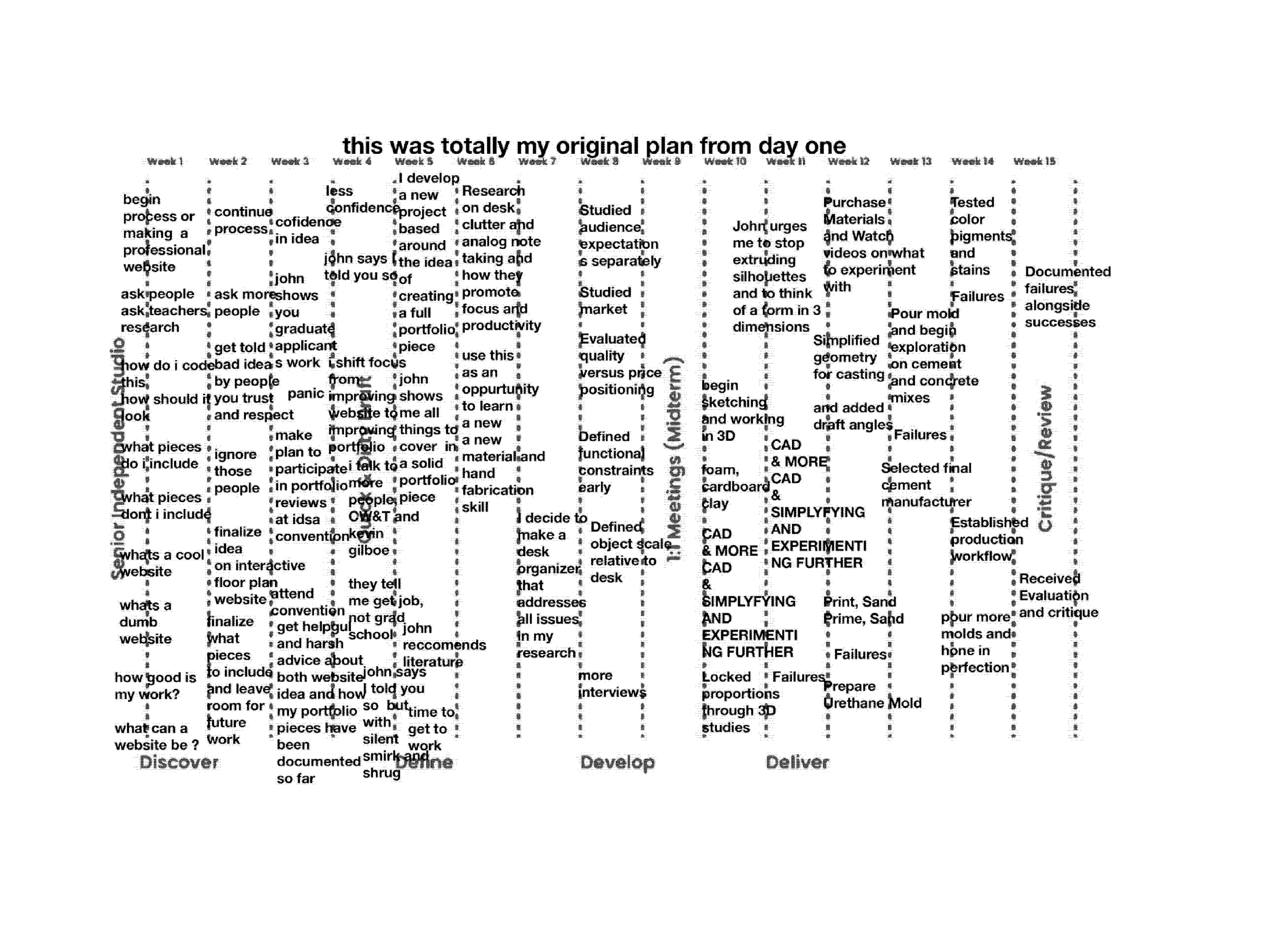
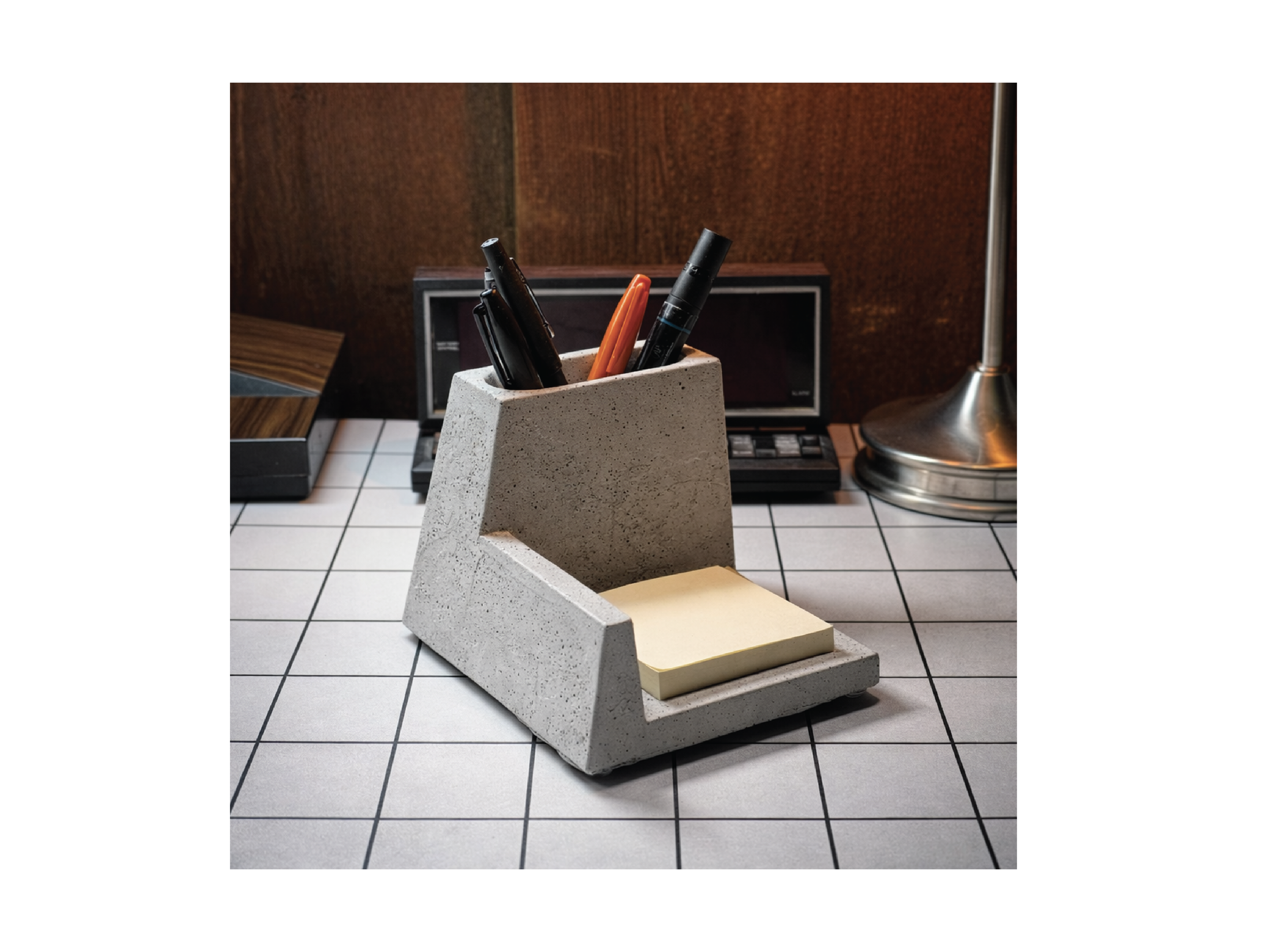
i began by questioning my work and what a professional portfolio should be, asking teachers and peers what mattered and what did not. As I took in mixed feedback, I moved from self doubt toward clearer focus, better documentation, and making stronger work. Research into desk clutter, analog note taking, focus, and productivity helped shape that direction and led me to concrete as both a material and a skill, resulting in a desk organizer that turns those questions into a clear, physical portfolio piece.
how to create a perfect portfolio piece?
With guidance from my professor, I was able to clearly map out what a complete portfolio piece needs in order to communicate my process and show both the successes and the failures that shaped the final outcome.
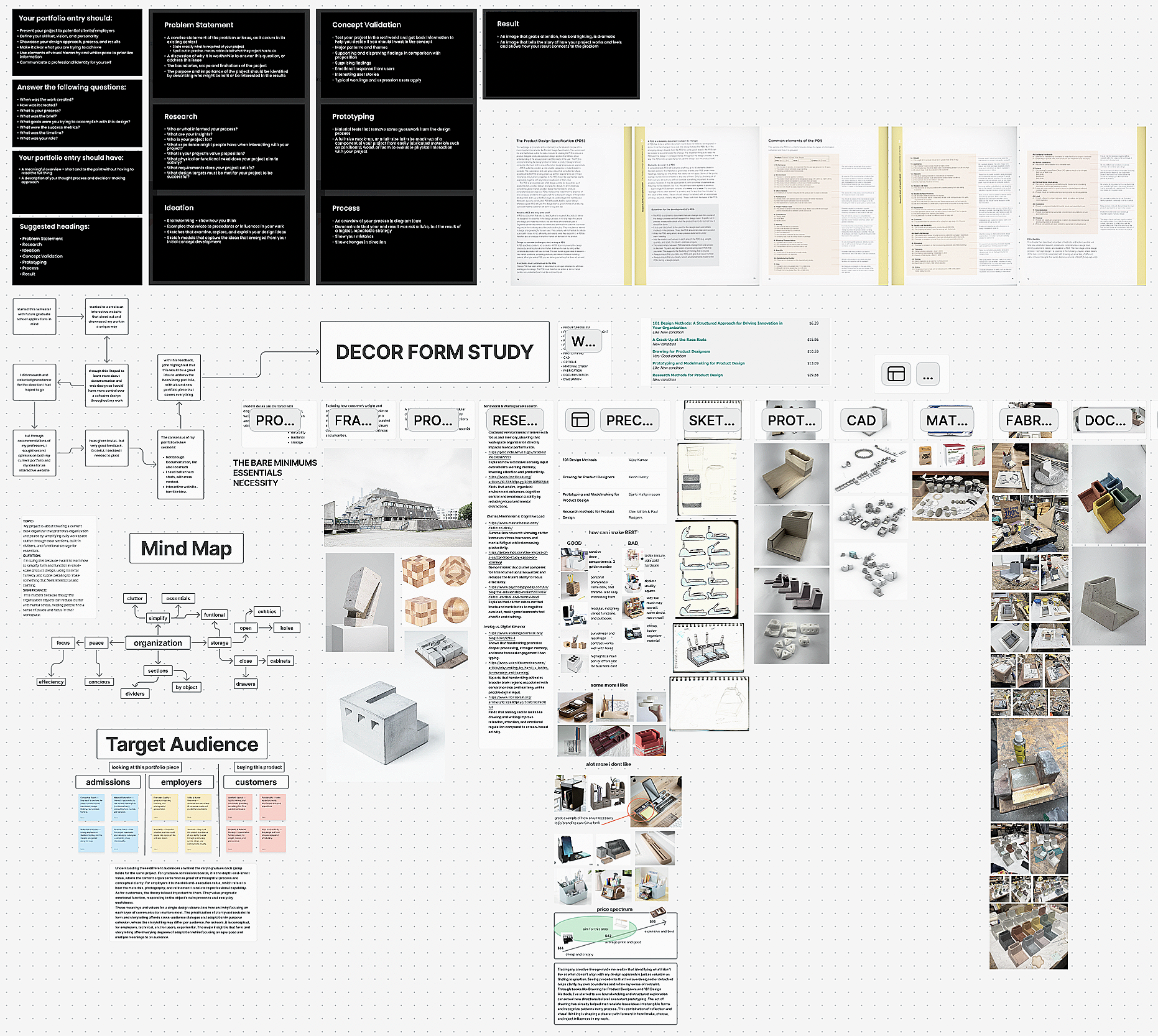
research, precedence, audience, and getting started
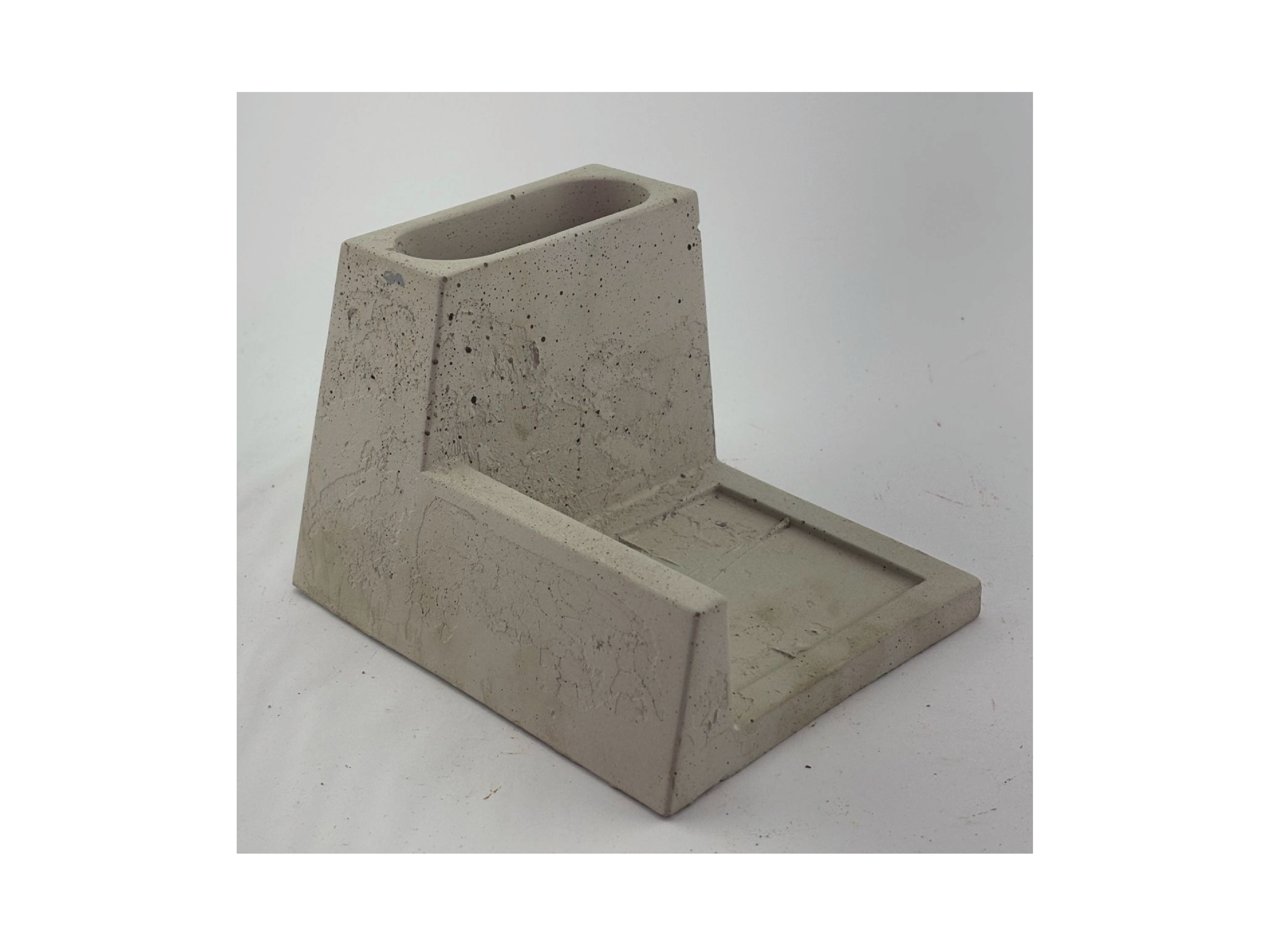
I began by questioning how cluttered desks filled with disposable objects increase stress and reduce focus. I explored concrete for its weight, permanence, and quiet authority, leading to a standalone or modular desk organizer designed to promote stability and intention. Influenced by restrained brutalist forms, the project balances minimal function with material presence. Research on organized environments and analog behaviors reinforced the value of tactile focus, while precedents and sketching clarified proportion, restraint, and accessibility across different audiences.
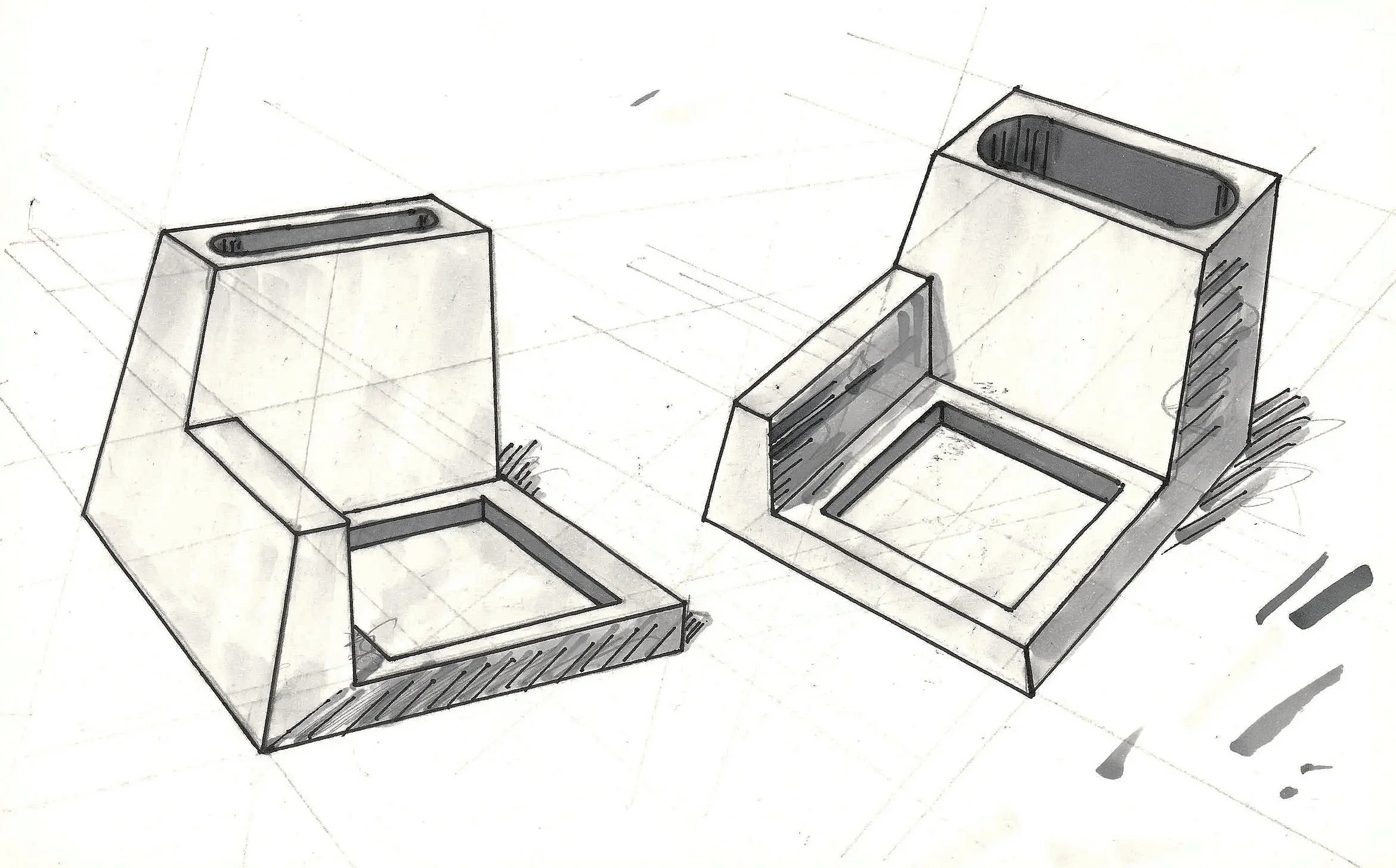
sketching
I recognized that strengthening my sketching skills was essential to more effectively explore and communicate ideas at the earliest stages of the process. Drawing for Product Designers reframed sketching for me as a thinking tool rather than just a presentation skill, allowing me to quickly test proportions, structure, and form with greater clarity before committing to prototyping.
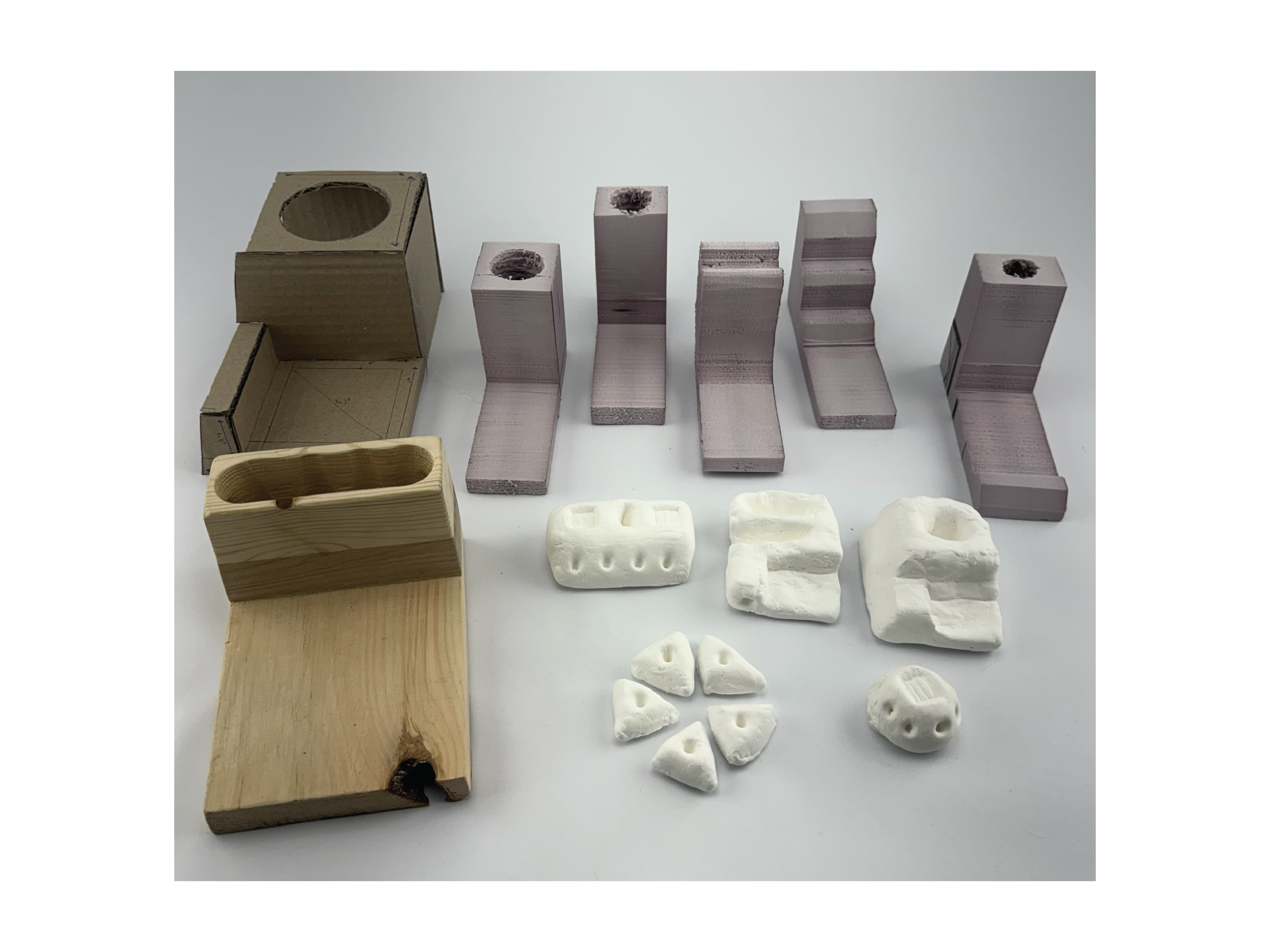
prototyping
From sketching, I moved into physical prototyping to think through ideas in three dimensions. Working with foam, cardboard for precise dimensional studies, wood, and clay allowed me to test scale, proportion, and form directly, helping translate drawings into tangible objects and refine decisions through hands on making.
CAD
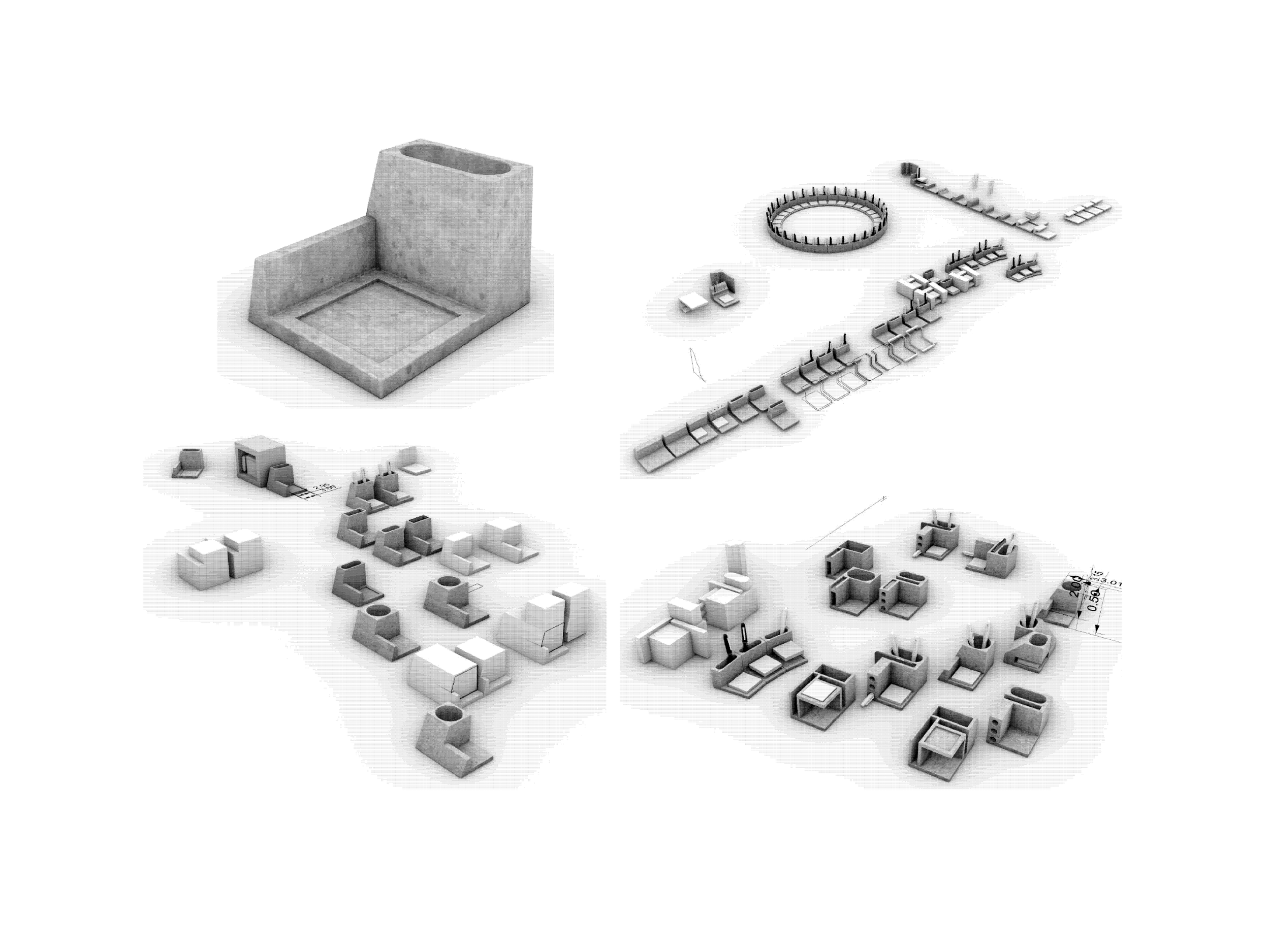
After physical prototyping, I brought my experiments into rhino, where I could iterate more quickly and precisely. Working digitally allowed me to refine proportions, test variations, and push the design further, resulting in the development of over 350 distinct models.
Materials
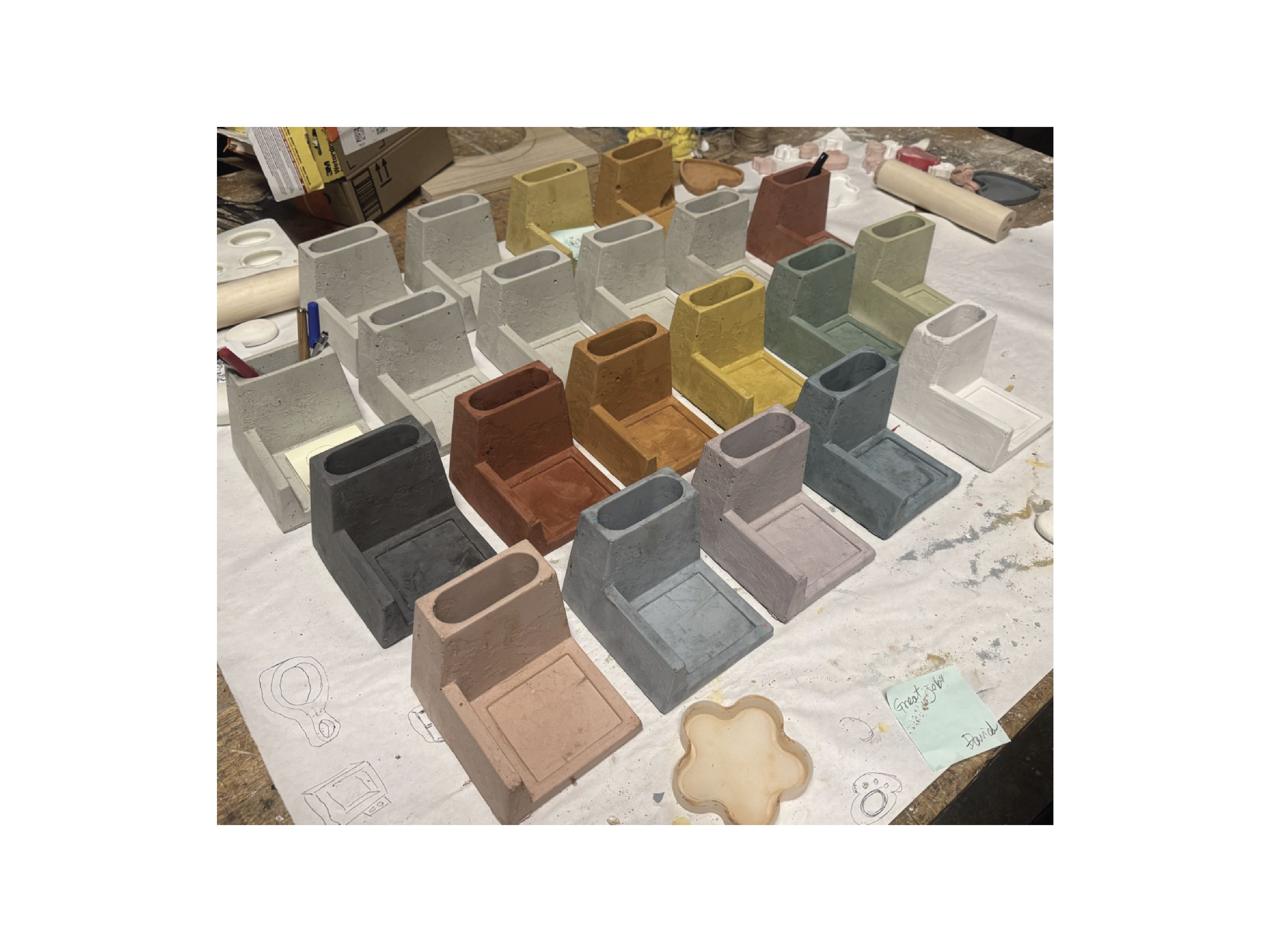
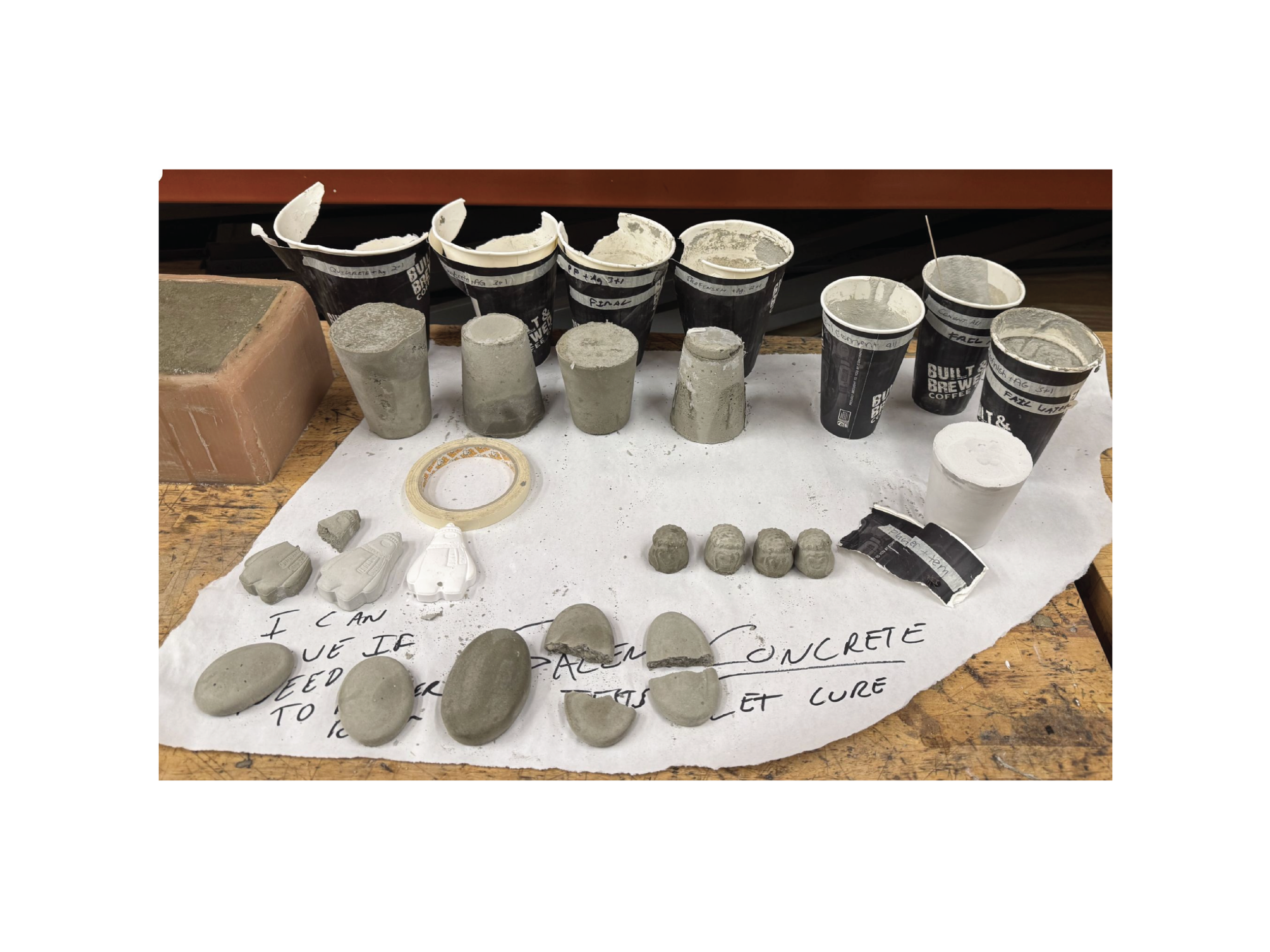
Material exploration is where I learned the most. Through dozens of tests with different cement manufacturers, aggregate amounts, and water ratios, I refined a mix that poured cleanly, cured quickly, and supported rapid making. CementAll stood out by achieving high strength in just a few hours rather than days, even outperforming other mixes after full curing. I applied the same testing mindset to mold making, physically comparing silicone and urethane swatches by hand to find the right balance of flexibility and rigidity for both the material and the form.
fabrication
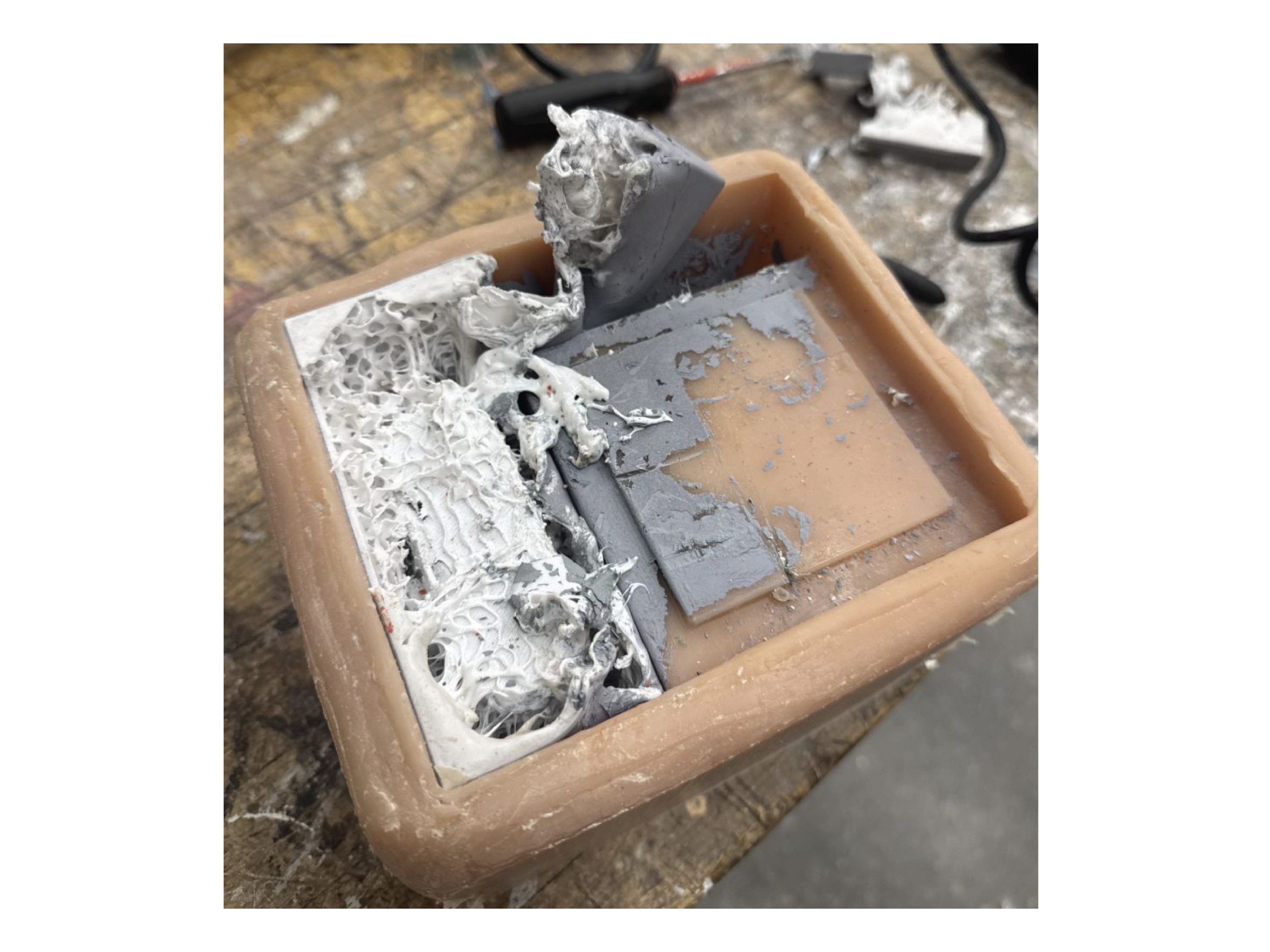
this was where I learned the second most through hands on mistakes and adjustments. Not clamping molds led to convex walls, while clamping too tightly caused concave deformation. Skipping mold release when pouring urethane resulted in hours of difficult demolding, and attempts to fix issues with a Dremel and heat gun left blemishes and caused primer to adhere to the urethane. While casting, I also learned how timing affects results, as waiting too long before pouring led to curing and trapped air bubbles, and I found that petroleum jelly worked more reliably as a mold release than spray on Mann Ease Release.
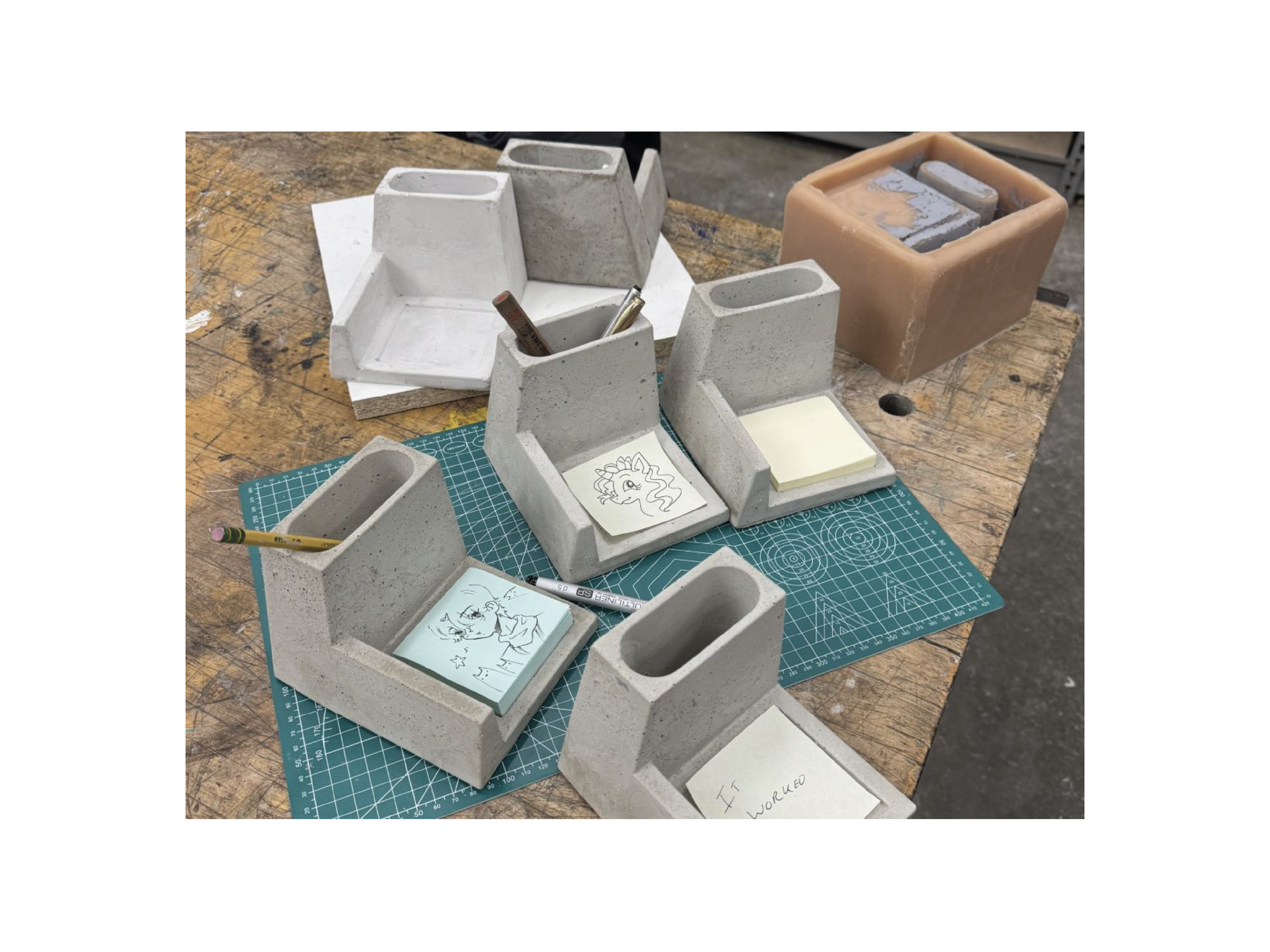
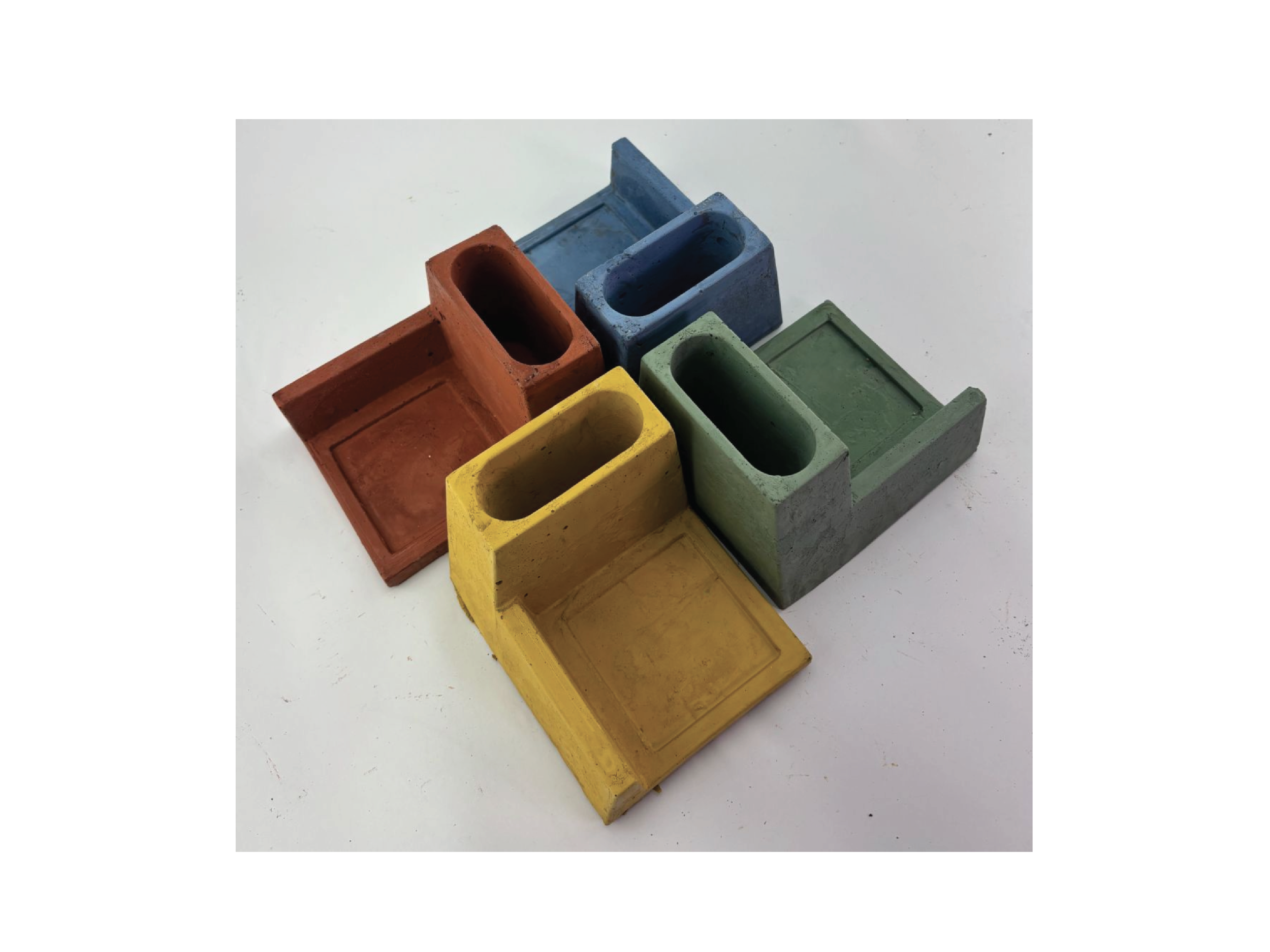
I experimented with color by testing red iron oxide powder and Mason stains. Through repeated trials, I was able to achieve a range of tones and overcome the muted, grey cast that early concrete samples produced. This process allowed me to dial in consistent, intentional colors rather than letting the material dull the final result.