skydda (verb): to shelter, protect, or cover
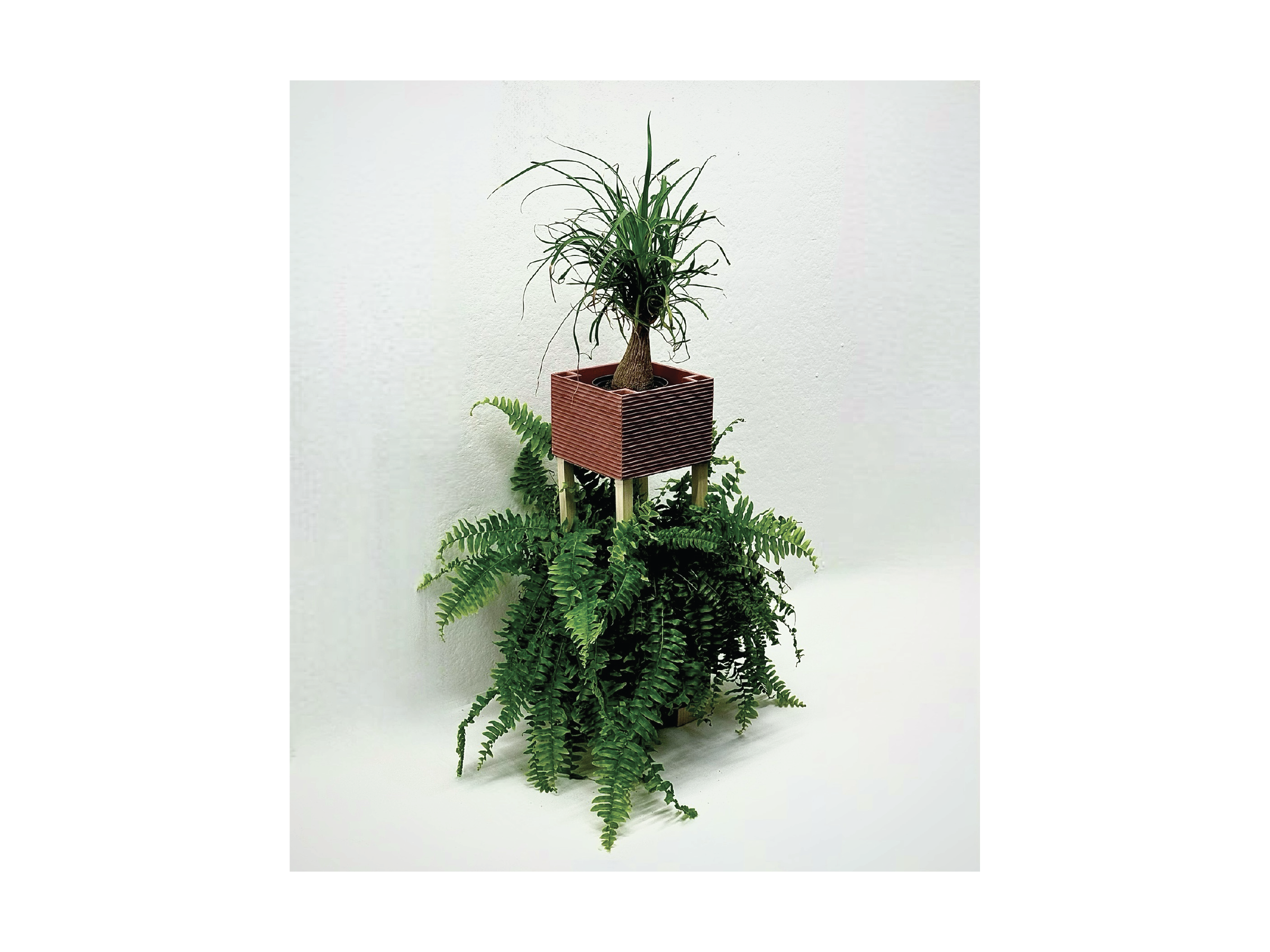
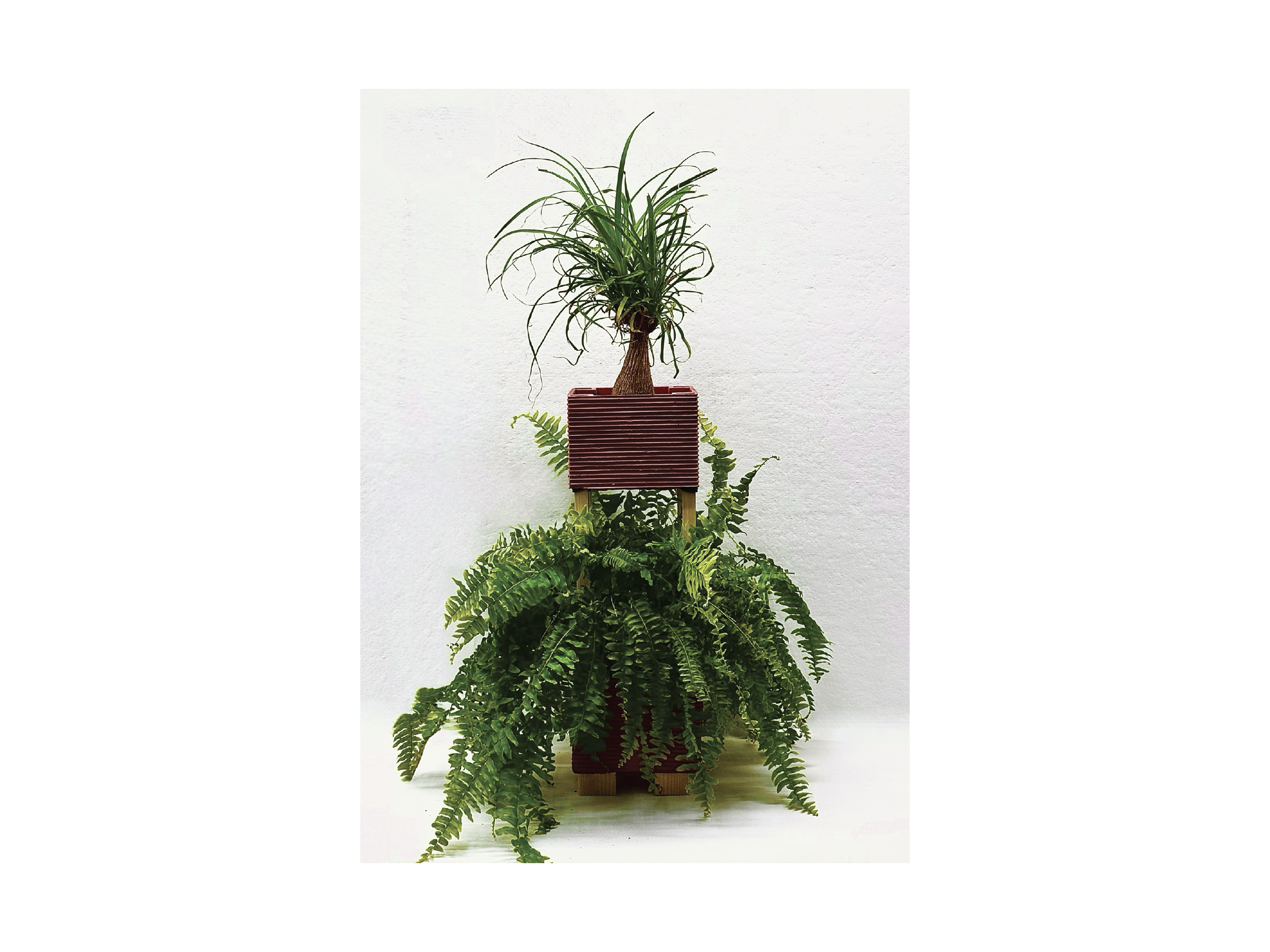
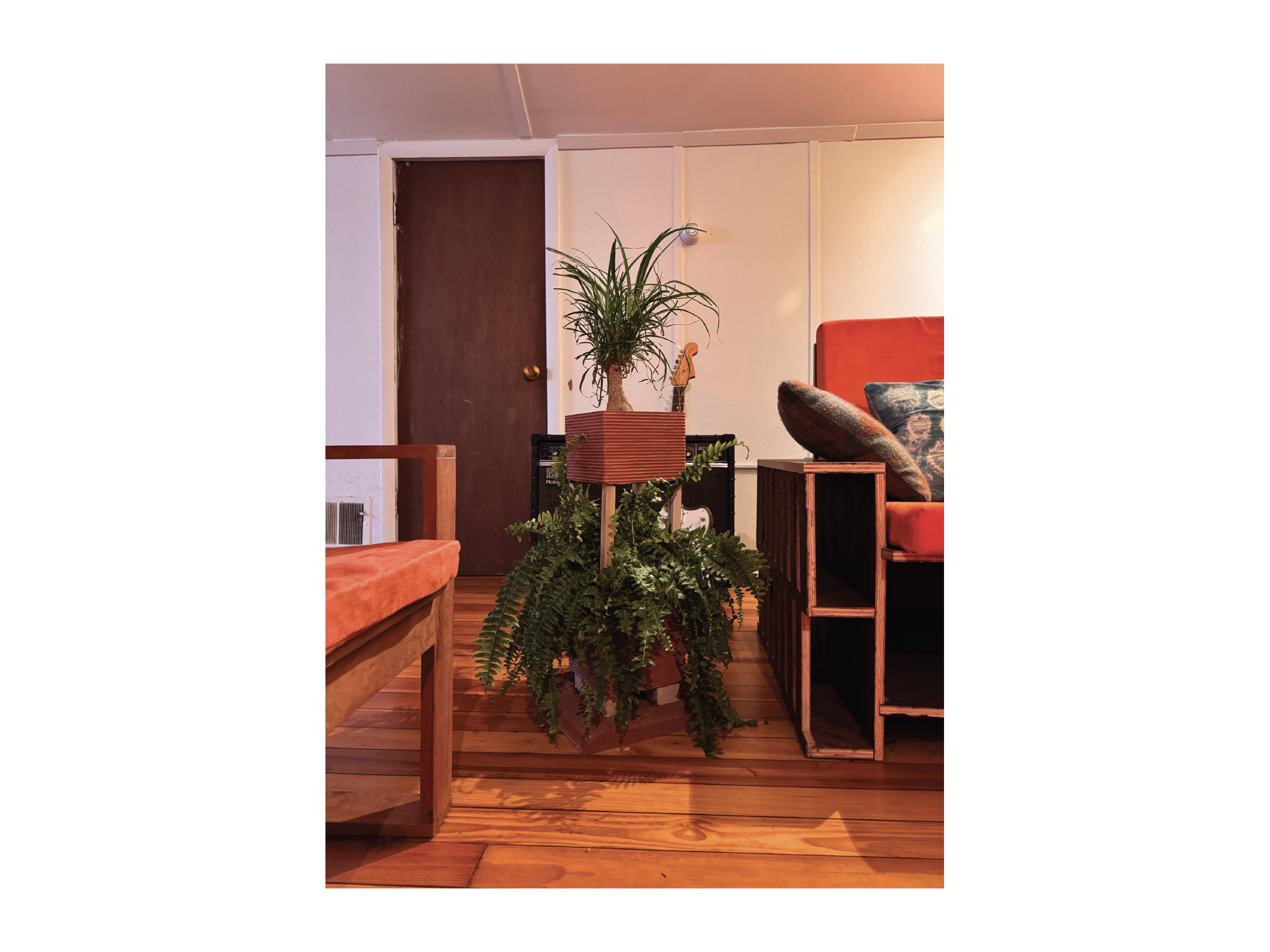
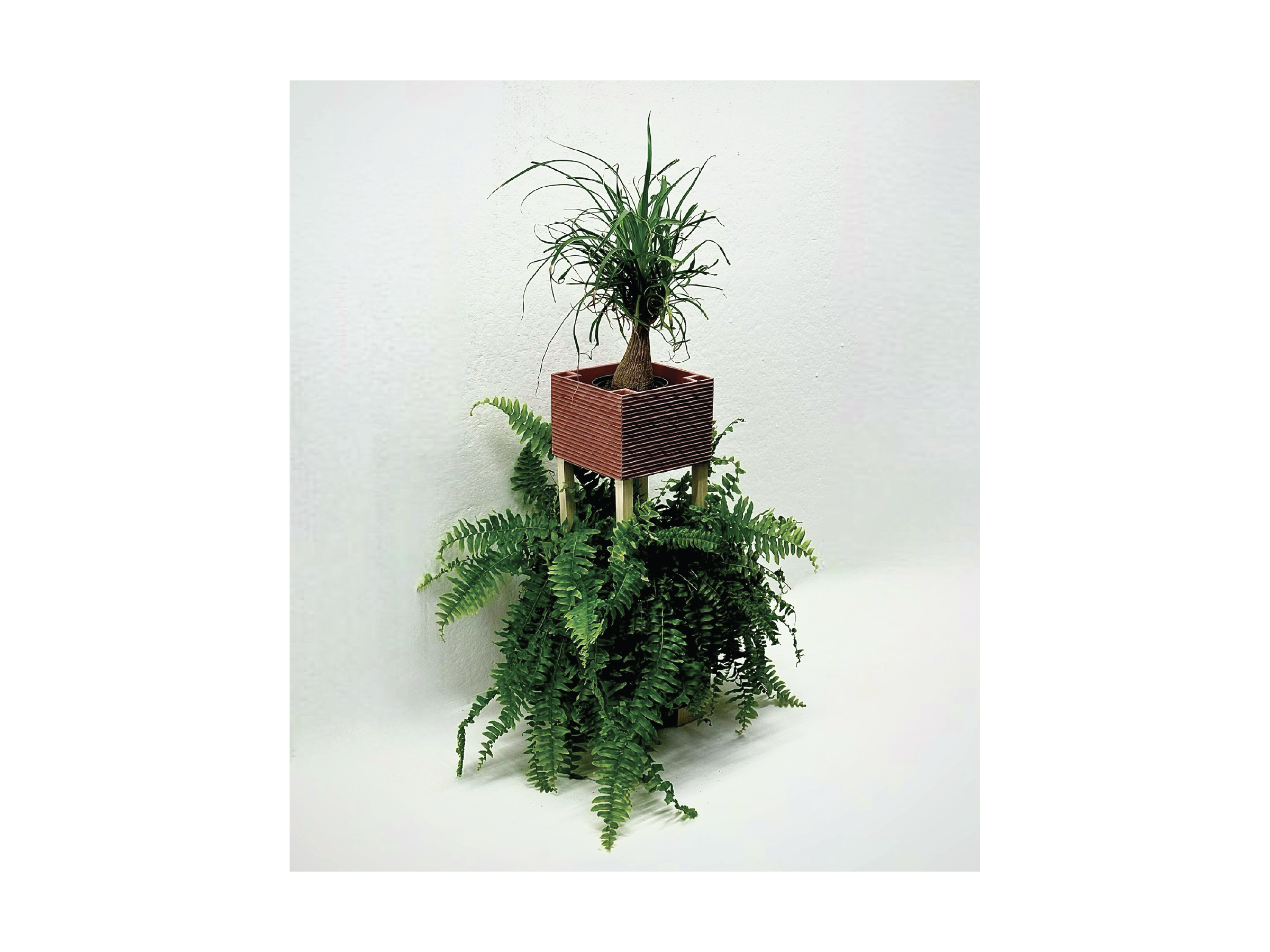
a modular terracotta planter system that brings greenery, natural cooling, and architectural structure into the home. freestanding forms fill awkward corners and unused spaces without the need for tables or stands, creating a small furniture ecosystem that softens the room, organizes plants, and makes the space feel more alive.
for this project, i set out to create functional home decor: an object that could hold space visually, but also serve a purpose beyond decoration. i was interested in designing something that could take up space intentionally, bring warmth into a room, and support everyday living in a practical way.
primary research
early research focused on geometric forms and how they could stack, shift, and interact within a room. many of the first shape studies felt too fixed, only allowing one obvious way to arrange or connect them. that limitation pushed the project toward a more flexible cubic form, where height attachments and corner openings could create more variety in how the user builds, plants, and arranges the system. research into philips design’s microbial home kitchen also introduced terracotta’s natural cooling properties, making the material feel essential to the project rather than purely aesthetic.
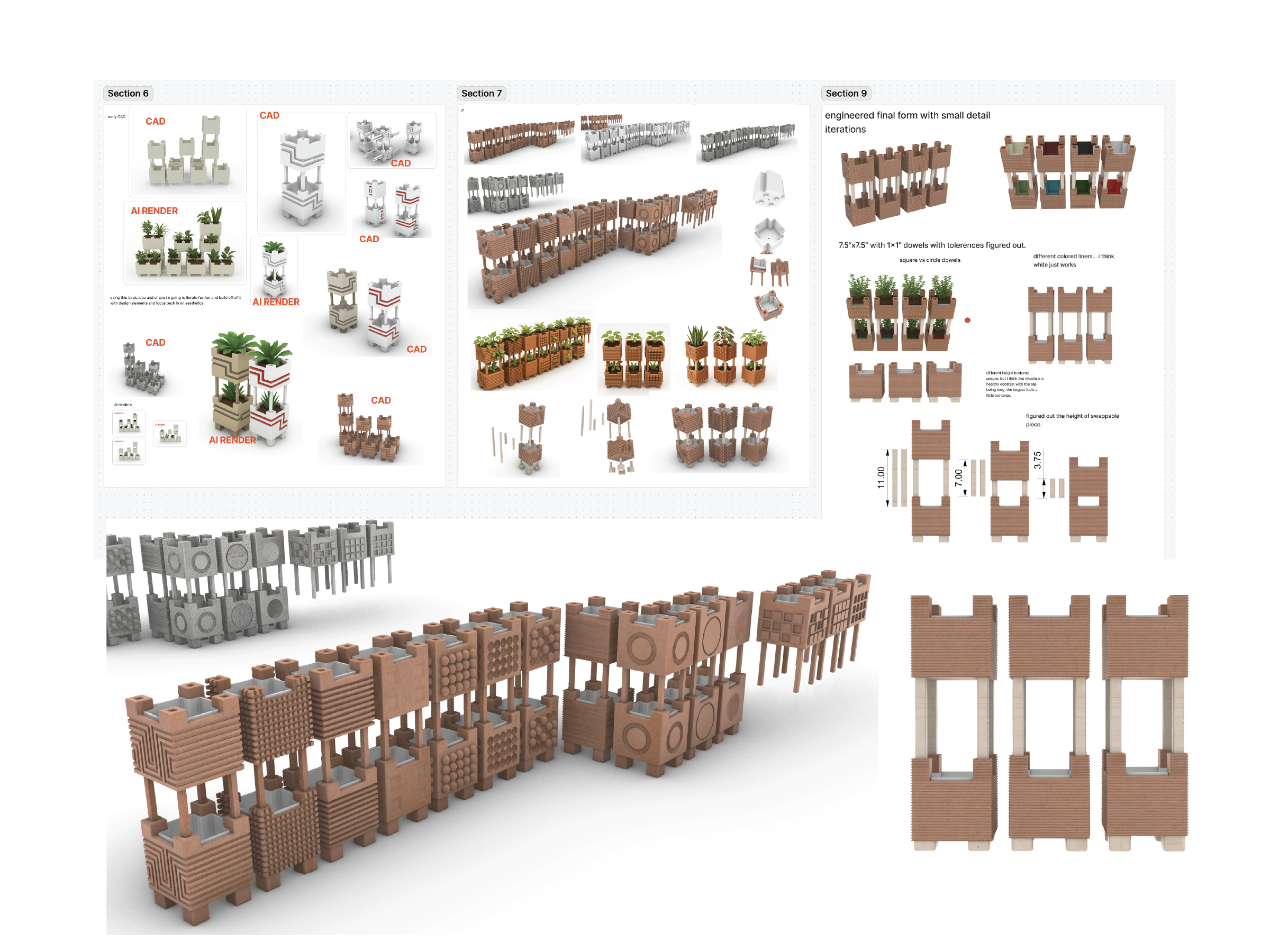
early CAD & surface design exploration
at this stage, CAD became the main tool for exploring the surface language of the planter. because the overall form was intentionally simple, the project no longer needed heavy sketch development or complex 3D form changes. the surface design became the element that would define the object’s character.
designing a planter also introduced a useful constraint: the plant had to remain the visual focus. the form needed to hold its own as an object, but not compete with the greenery once planted. early surface ideas pulled from Aztec and Navajo pattern references, which I’m personally inspired by, but the direction gradually shifted toward more minimal and uniform textures. this made the design feel more adaptable across different home interiors while still giving the terracotta form a distinct identity.
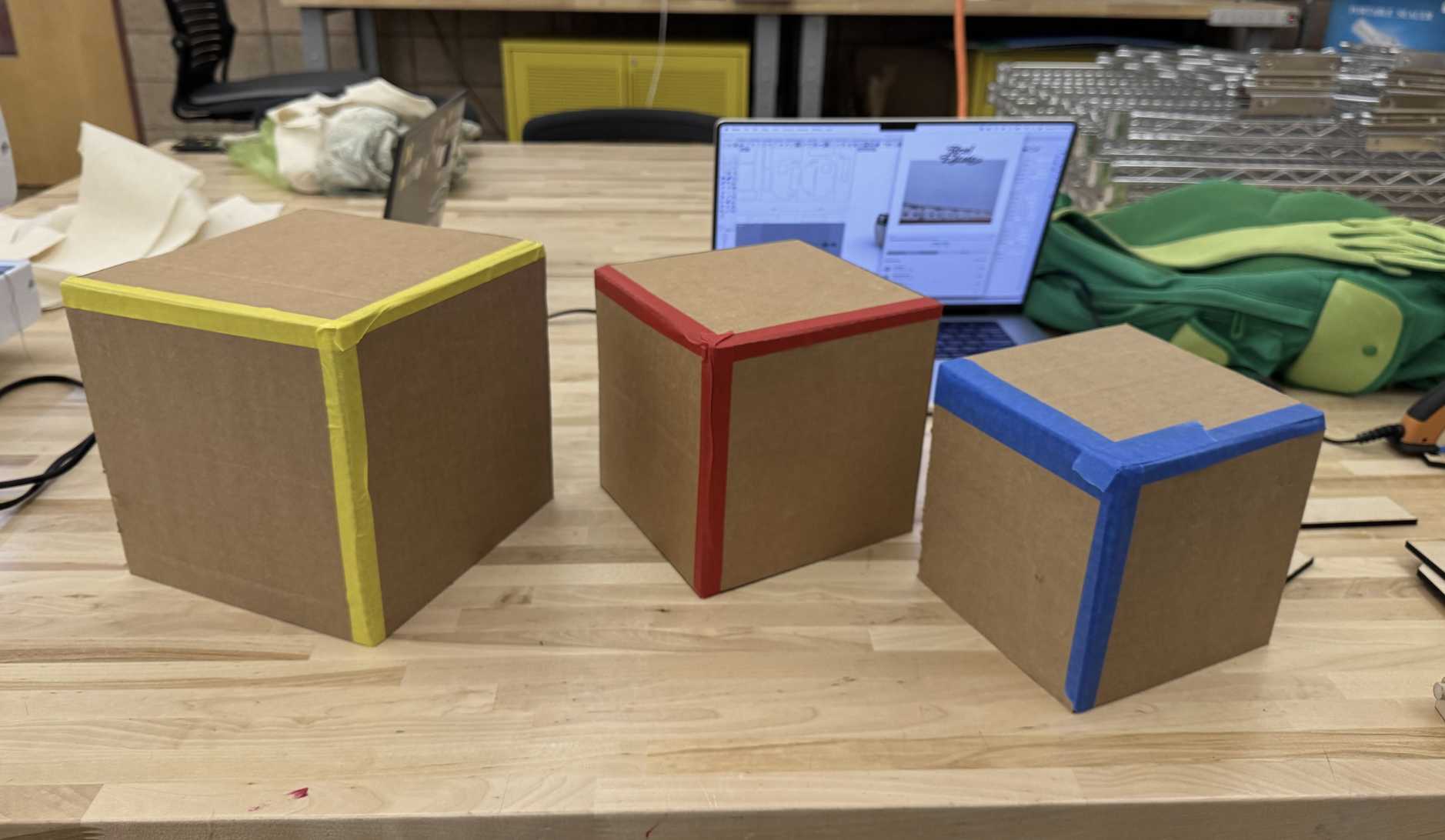
scale study
after deciding on the general form, physical scale studies helped test how the system would actually sit in a room. i built 8x8, 7x7, and 6x6 inch cubes to compare proportion, presence, and usability at real scale. seeing the forms in physical space clarified which sizes felt too bulky, too small, or most furniture-like, giving me a stronger foundation before moving into CAD for deeper exploration.
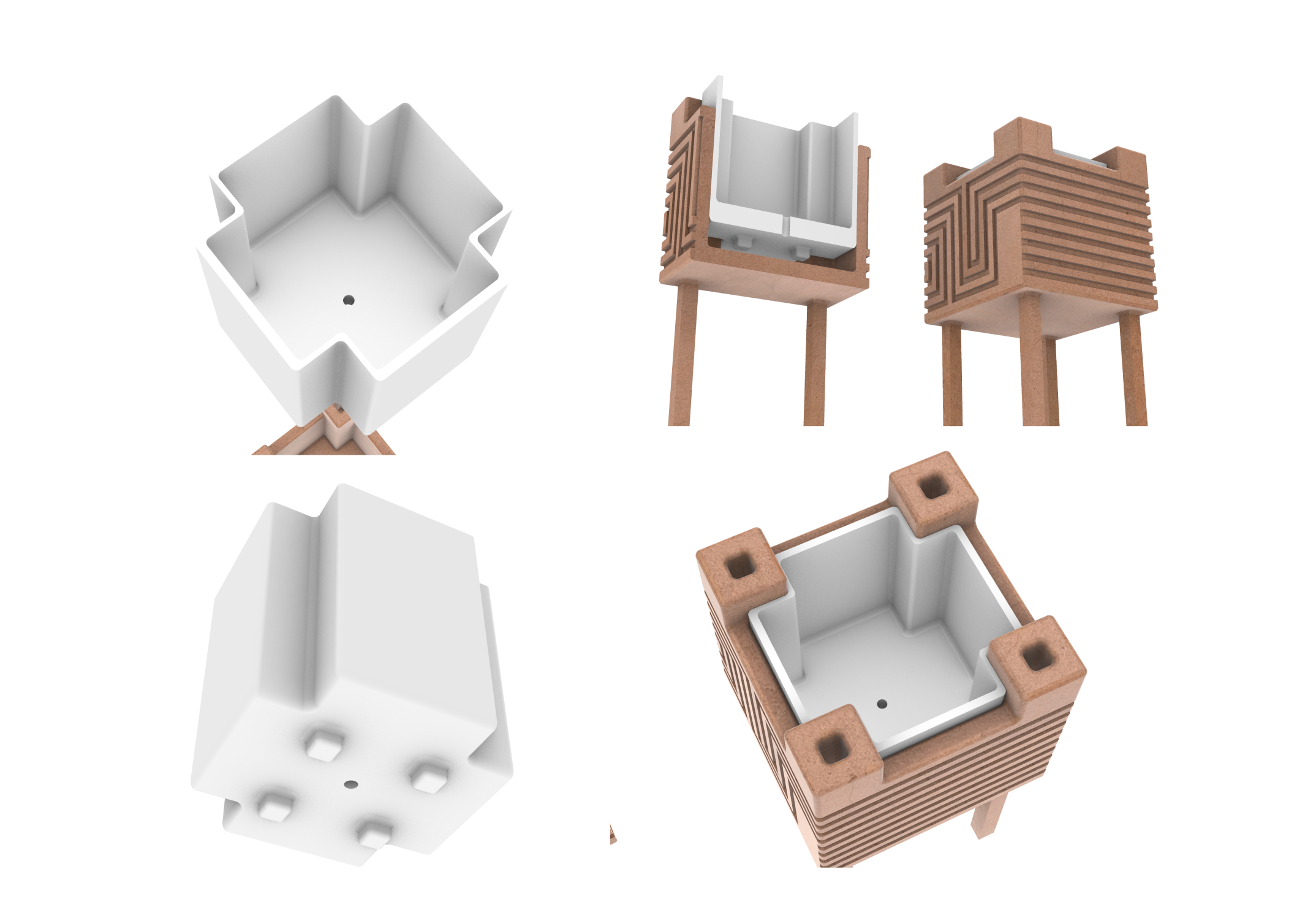
drainage system
because the modules stack directly on top of each other, traditional saucers would not work for the upper planters. this led to a removable plastic insert system that allows each plant to be lifted out independently. excess water can be dumped and cleaned without disturbing the full stack, making the planter easier to maintain while keeping the exterior form clean and uninterrupted.
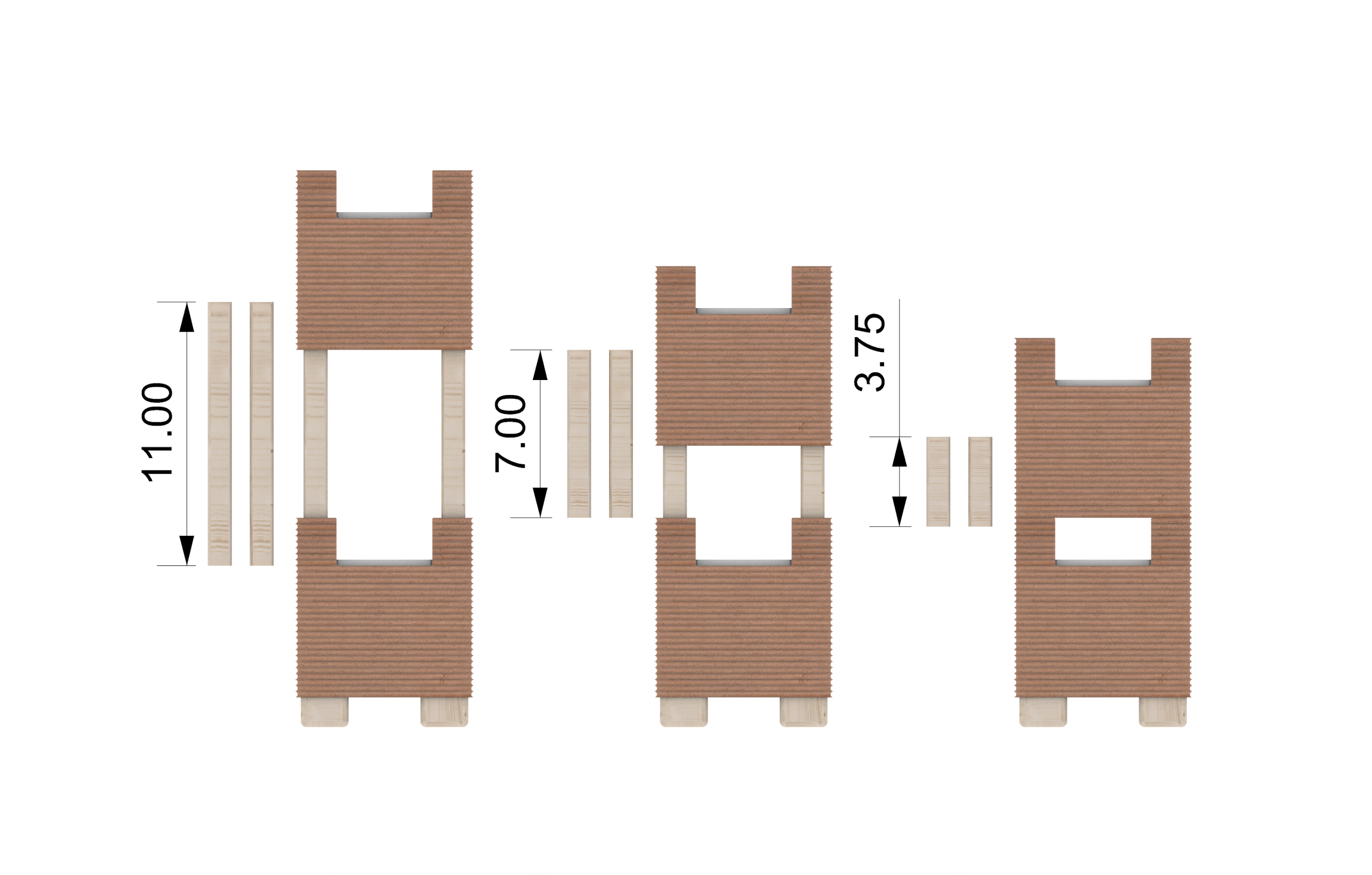
extender rods and feet
three extender sizes were developed to create controlled variety within the system. these pieces allow users to adjust height, spacing, and composition while keeping the overall language uniform. i also tested round dowels as a contrast to the angular terracotta forms, but the softer geometry visually worked against the cubic design, leading me back toward a more integrated structural solution.
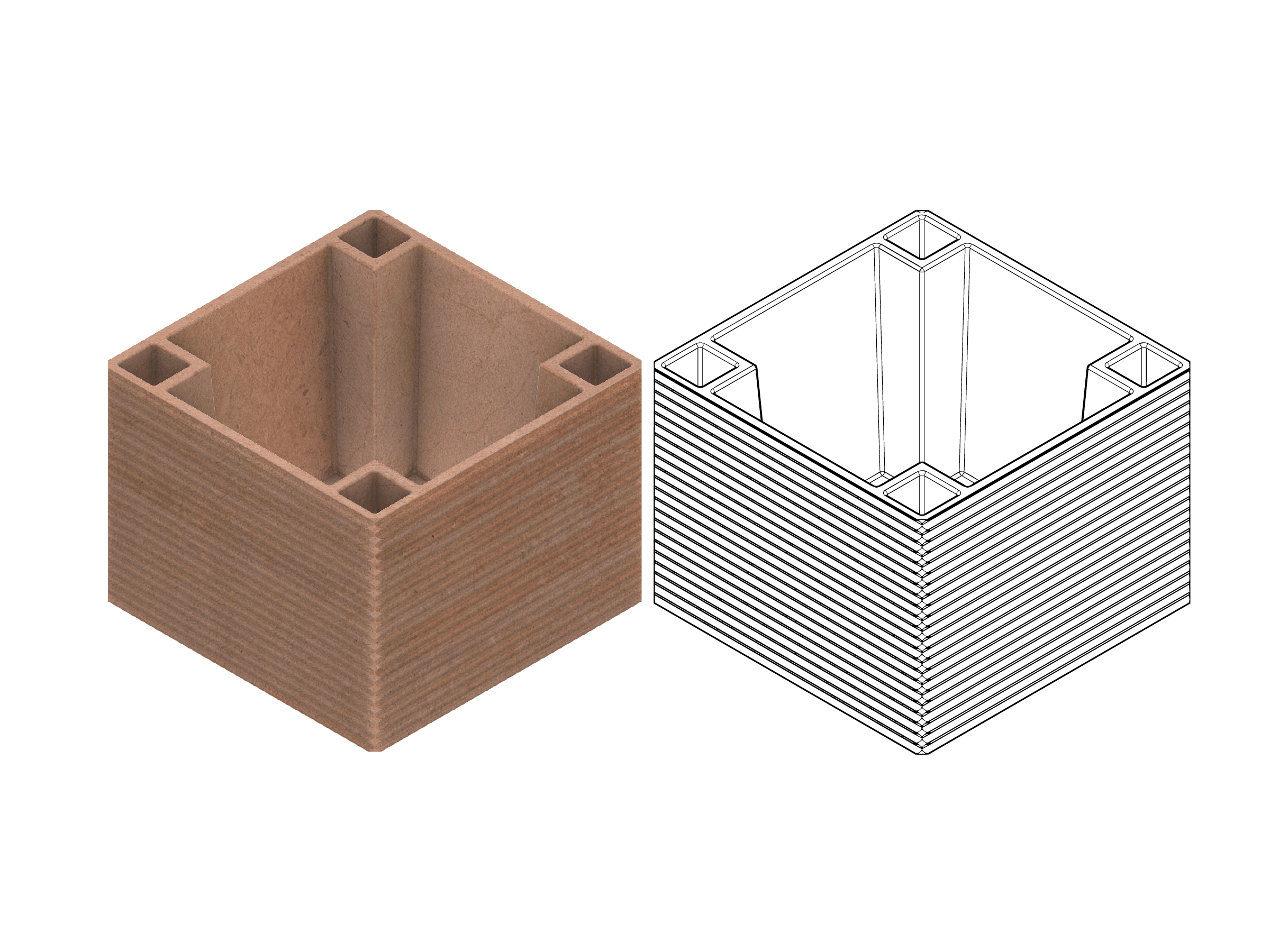
final surface direction
after narrowing the surface studies to three options, i gathered in-person feedback from over 100 people to understand which texture felt the most accessible across different home environments. the final pattern was the clear favorite, with 81% selecting it as the most approachable design. this direction balanced visual interest with restraint, giving the planter a distinct surface without competing with the plants themselves.
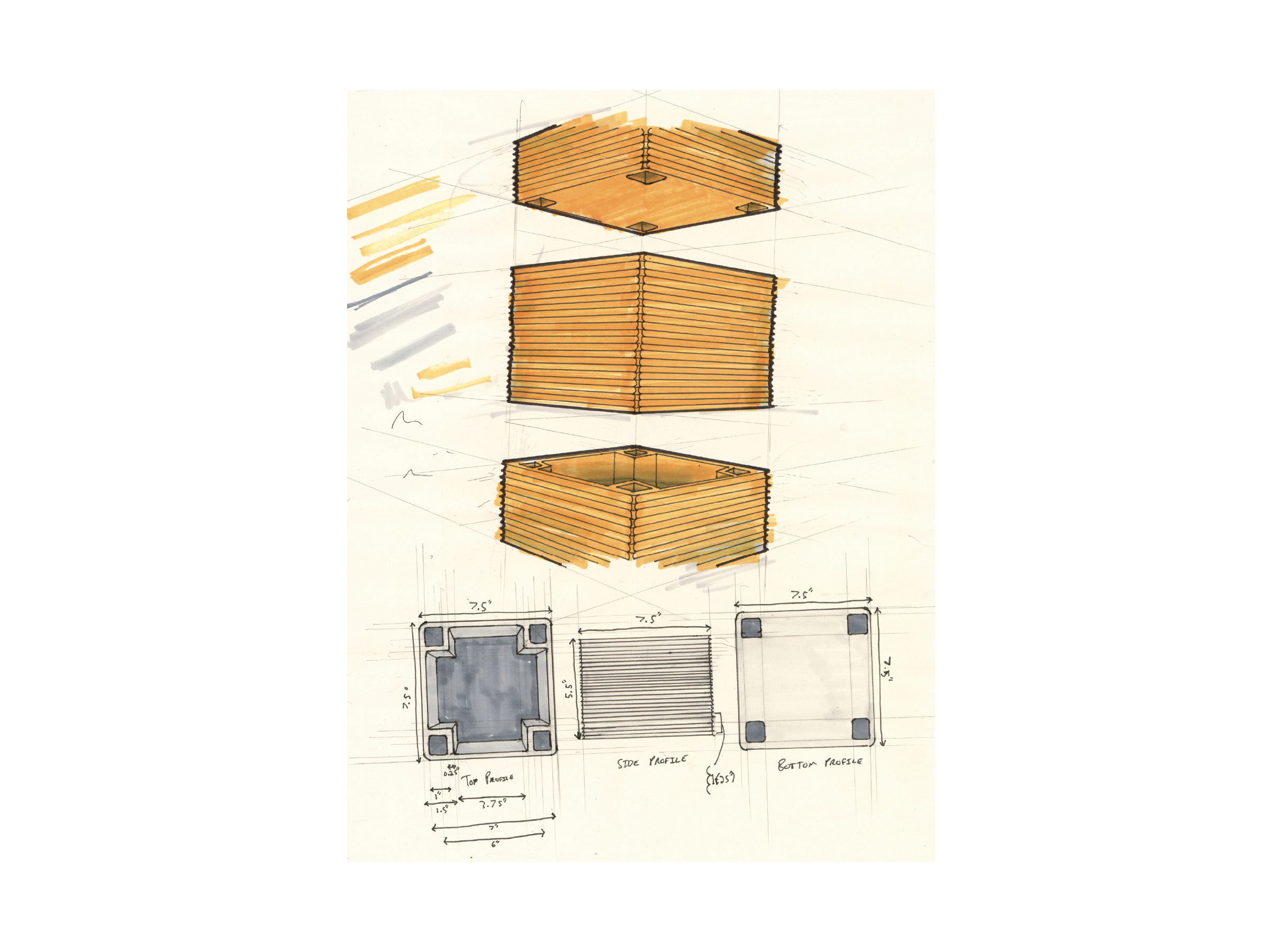
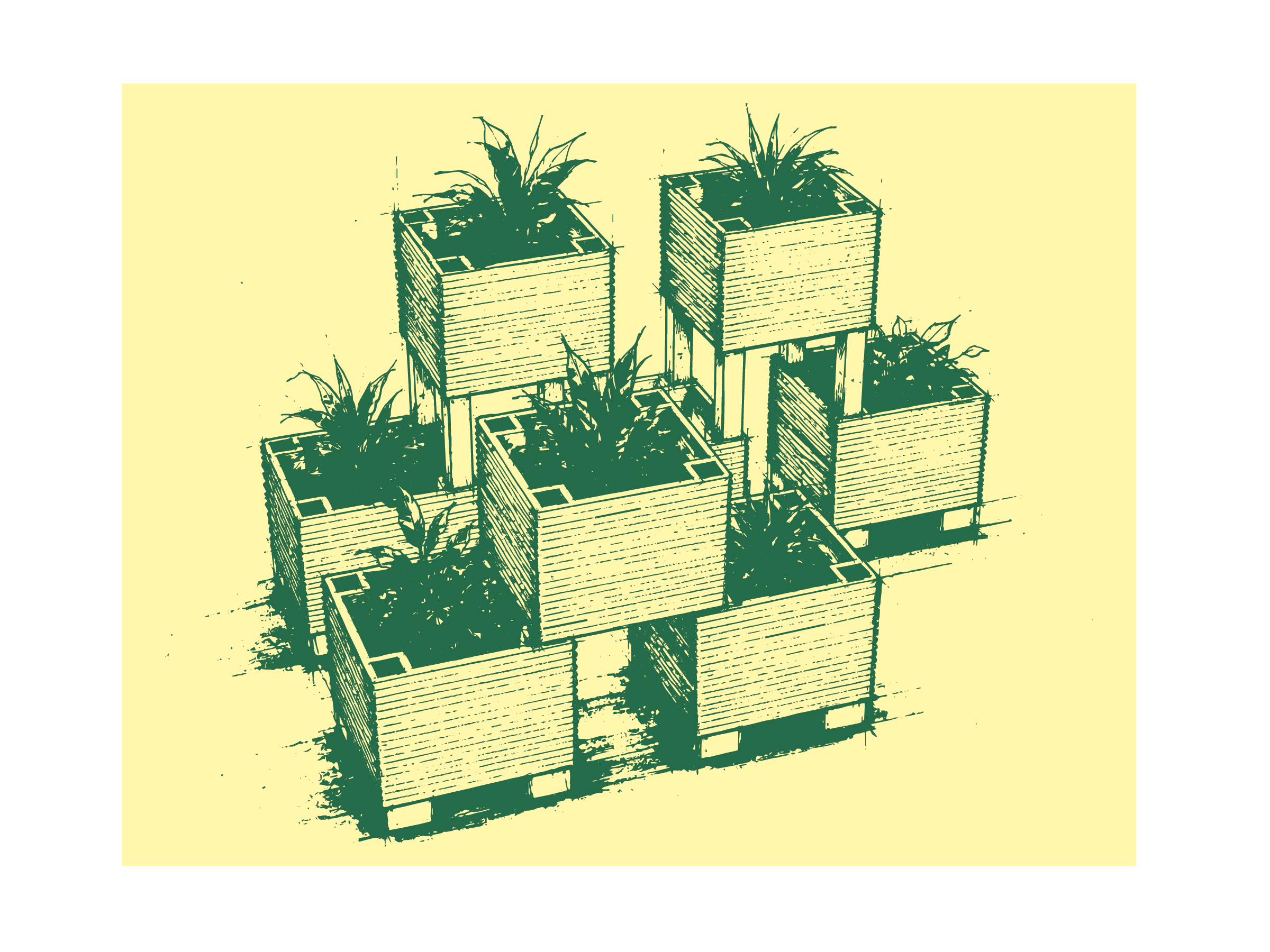
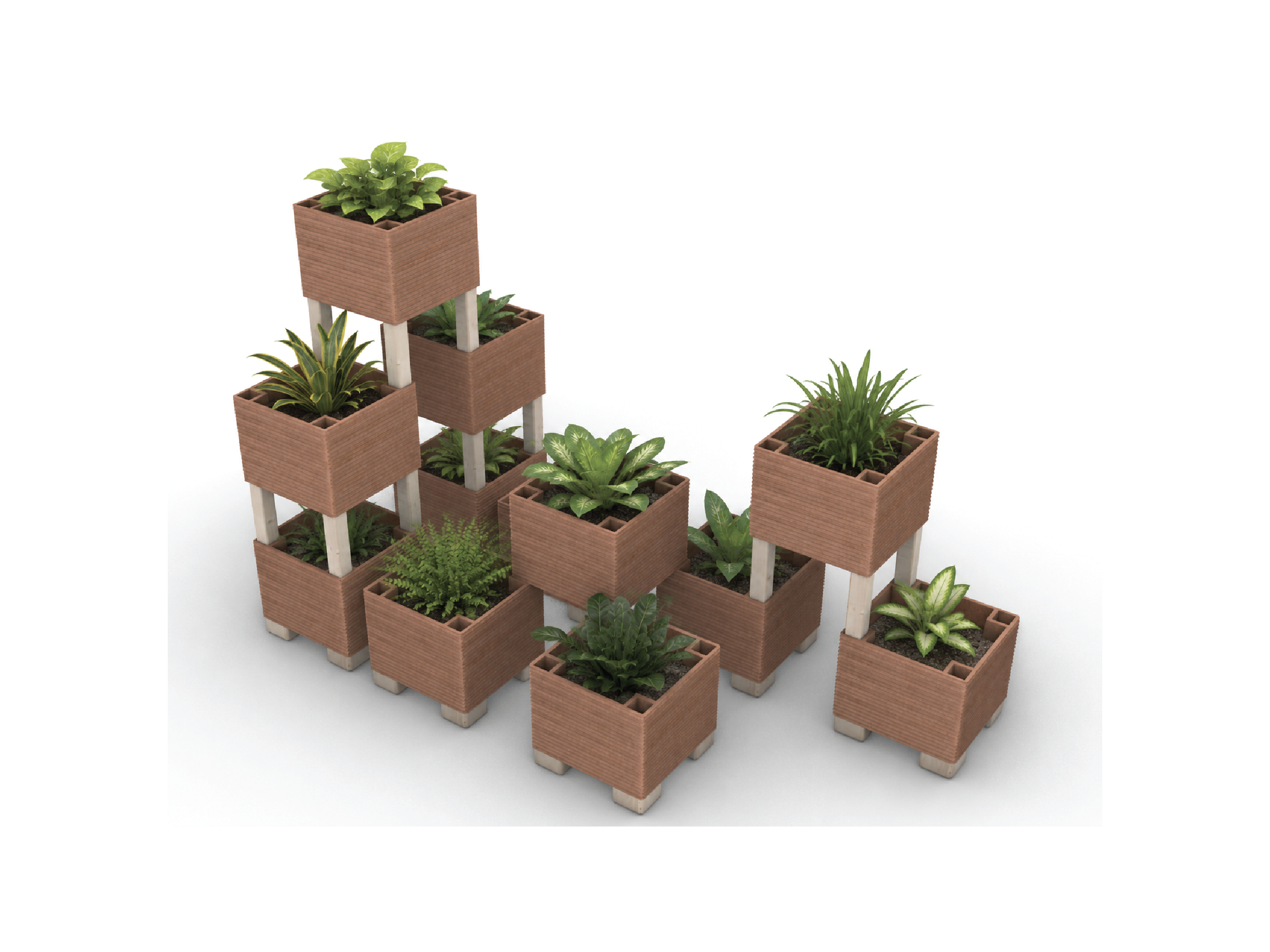
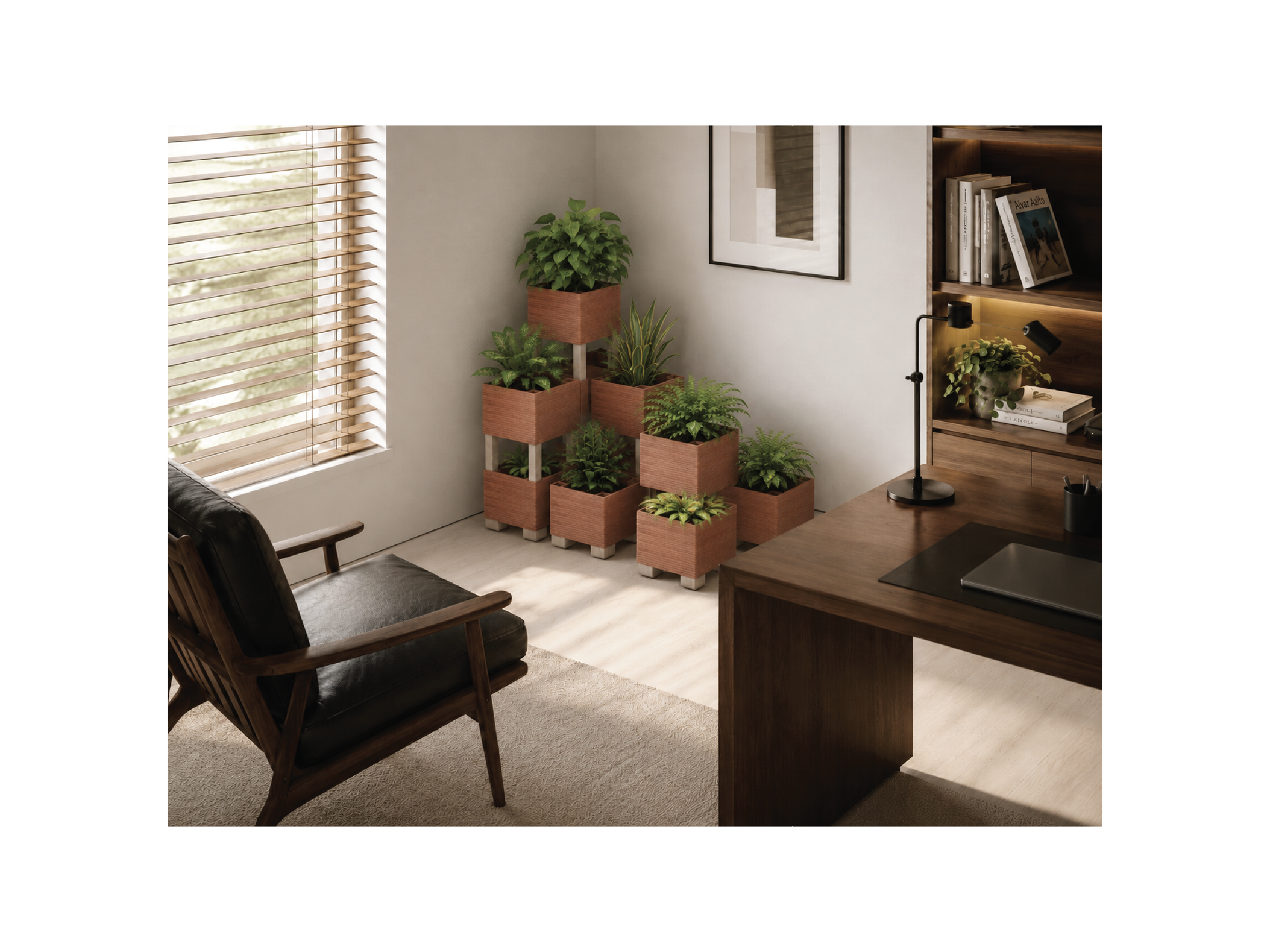
final sketch + form renders
the final sketch established the overall form, proportions, and modular stacking logic of the planter system. from there, final renders explored how the terracotta units could live in a home environment, showing the piece as both a planter and a freestanding furniture object.
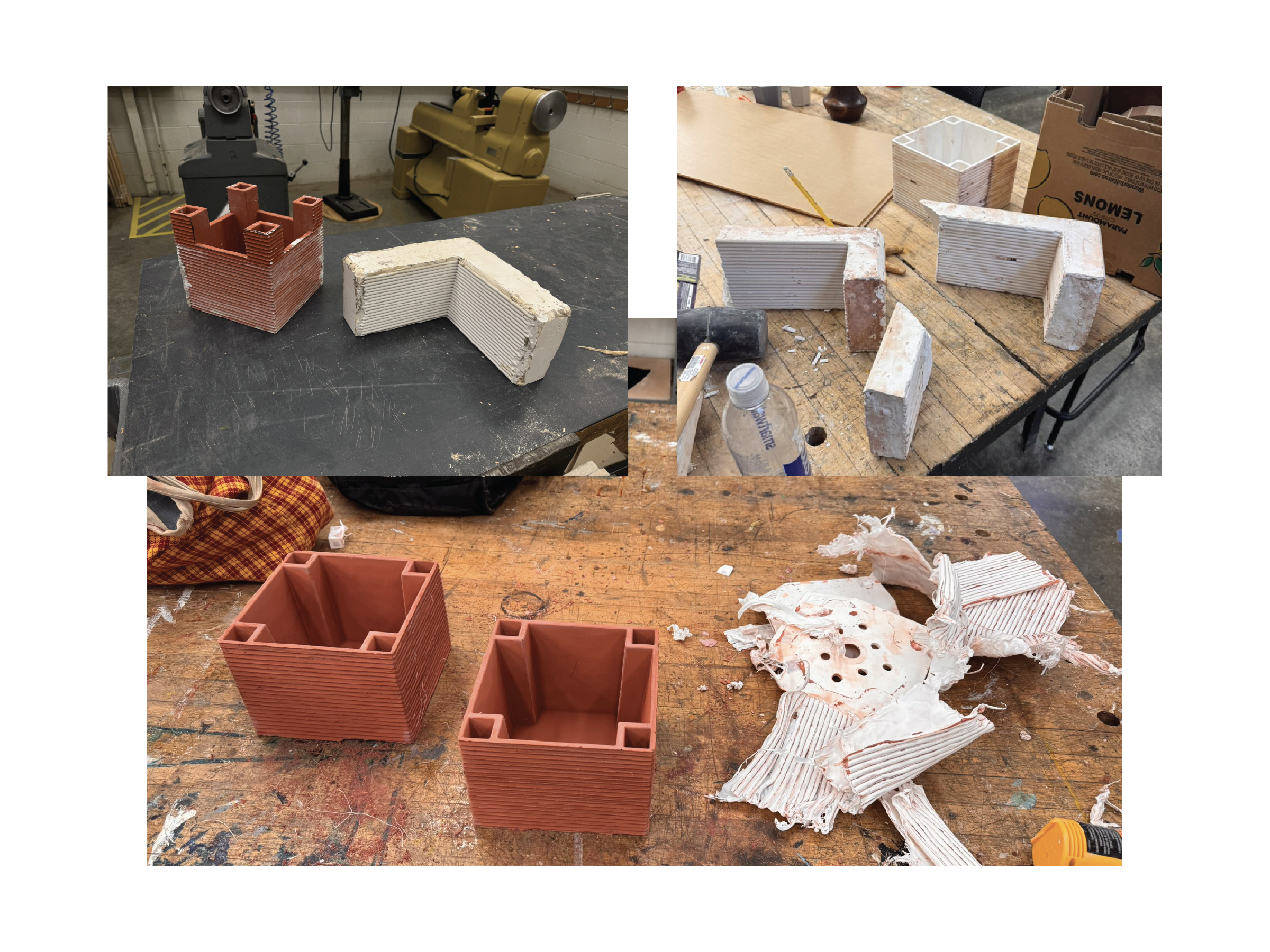
fabrication failures
with over 40 attempts to create a plaster slip-casting mold, the geometry proved too complex for the process. the sharp corners, internal holes, and modular connection points created repeated issues with mold release, wall thickness, and consistency. eventually, i had to pivot. the form may have been possible with more advanced manufacturing methods, but within the tools and time available, i had pushed the process as far as i could. to create a proof of concept, i reversed the mold logic by making a thin PLA negative form and casting cement mixed with red oxide powder, allowing me to produce a small set of finished pieces that still carried the intended material language.